Showing posts with label equality. Show all posts

Sunday, 15 December 2013

The future of same sex marriage in Australia

The High Court has found that the ACT Marriage Equality (Same Sex) Act 2013 is of no effect. 

Although some groups who are anti gay marriage are treating this as a win, the better view of the ruling is that it actually helps the case for marriage equality. 

The High Court have ruled that under the Constitution, '"marriage" is a term which includes a marriage between persons of the same sex.' You can see the full judgment here. This now clears the way for the Commonwealth to make legislation allowing for same sex marriage, without requiring a referendum or reconsideration of the Constitution. 

So although it is a very disappointing result for same sex couples in the short term, particularly those who were married and now have had the marriage declared invalid, in the long term, having same sex marriage legislated at a federal level is a far preferable outcome.

Having Commonwealth Legislation rather than state or territory laws means that marriage really will be equal, rather than having one set of laws for heterosexual couples and another for same sex couples. 
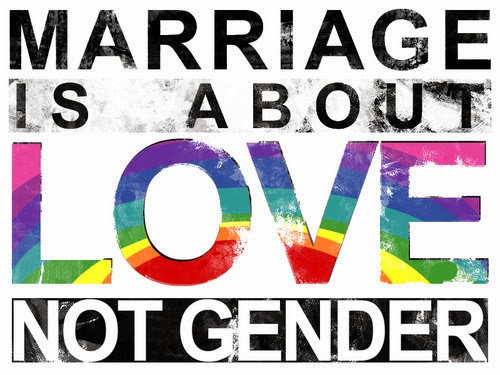
As set out in my previous blog post on ACT same sex marriage, if the High Court had declared the legislation valid, although that would have meant that same sex couples could be "married" in the ACT, it would not be the same as a marriage under the Marriage Act and would therefore still be separate. It would have also created difficulties for those couples from a Family Law and Estate Planning point of view. In particular, divorce and property settlement could have become a much more complex and costly exercise for these couples. 

There would have been different definitions of "marriage" and separate laws and systems for divorce. As a family lawyer, I was concerned that the ACT system would have created unnecessary cost for separating couples,  confusion regarding the applicable law and may have resulted in substantial (and costly) litigation. It may have also created problems in the event of the death of either partner and what would happen to that person's estate, will and superannuation. 

The Greens have now proposed the Marriage Equality Amendment Bill into the Senate, which provides for amendment to the commonwealth Marriage Act to remove discrimination on the basis of sexuality and gender identity.

Amending the Marriage Act really is the best way forward for true marriage equality and for equal treatment under the Family Law Act.

If you are a same sex couple and want advice about your current circumstances, contact Farrar Gesini Dunn Family & Collaborative Law for advice.

Tuesday, 10 December 2013

High Court to deliver judgment on same sex marriage this week

Driving through Canberra on the weekend I saw a happy sight - multiple wedding parties posing for photos and celebrating their marriage. But the question remains, will their marriages be valid?

This coming Thursday, the High Court will deliver judgment on 2 key questions:

- is the ACT Marriage Equality (Same Sex) Act 2013 inconsistent with the Commonwealth Marriage Act and/or the Commonwealth Family Law Act? and 

- if the ACT Legislation is inconsistent, does that cause the ACT Legislation to be of no effect or void?


In total approximately 46 couples have registered to marry under the ACT Legislation. So what affect will the High Court ruling have on them? 

If the High Court finds that the ACT legislation is inconsistent, then the likely effect is that the marriages will be deemed invalid. From a Family Law point of view, the parties would then likely be treated as de facto couples (subject to meeting the criteria under the Family Law Act) if they ever separate. 

If however the High Court declares the legislation valid, although this will mean that same sex couples can be "married" in the ACT, it does create some difficulties for these couples from a Family Law and Estate Planning point of view. In particular, divorce and property settlement could become a much more complex and costly exercise for these couples.

More on this coming soon...

Tuesday, 3 December 2013

A quick guide to the High Court challenge to ACT same-sex marriage legislation

Today is the first day of the substantial hearing of the Commonwealth challenge to the ACT's Marriage Equality (Same Sex) Act 2013.

Essentially, the questions for the Court to determine are:

- is the ACT legislation inconsistent with the Commonwealth Marriage Act and/or the Commonwealth Family Law Act? and 

- if the ACT Legislation is inconsistent, does that cause the ACT Legislation to be of no effect or void?

Both the Commonwealth and the ACT have filed written submissions in this matter, as have "Australian Marriage Equality Inc" (see here).

Brief Summary of the arguments:

The case for the Commonwealth is that:
"It has always been within the power of the Commonwealth to exercise that power to legislate to declare a single and uniform rule for Australian society as to what constitutes a valid marriage."
 They argue that the Marriage Act:


"leaves no room for there to be any other laws in Australia which purport  to clothe a union with the legal status of marriage (or a form of marriage)"

On that basis, the Commonwealth seek a declaration that the ACT Marriage Act is of no effect. 


The ACT however submits that 
"It is not accepted that the Marriage Act coupled with the Family Law Act, provides a uniform set of rules for the holding of the status of marriage for the law of Australia."

and that:
"The Commonwealth fails to demonstrate that the ACT law destroys or  detracts from a right conferred by the Commonwealth Law."

For their part, Australian Marriage Equality Inc submits:


"The critical question in the present case is therefore whether the ACT Act is to be construed as an inconsistent attempt to regulate attainment of the status of marriage which is regulated by the Marriage Act. It is not. The ACT Act attributes a character or status to relevant same-sex couples, being a type of status which was never regulated (and is now expressly self-limited) by the Commonwealth in the Marriage Act."

 
For more information visit www.fgd.com.au

Friday, 8 March 2013

Happy International Women's Day


Today is international women's day. But what does this actually mean for me: a single 30 year old woman living and working in Canberra Australia? 

To be honest, most years it means attending a breakfast or lunch seminar where we hear about some of the great achievements women have made in the past. I then go back to work and continue with my day. 

This year, I missed out on the lunch, but it still gives me time to reflect on where I am in life.

Growing up in Australia, and having parents who are very focused on equality for everyone, I am extremely lucky. I was brought up to believe I can achieve anything I set my mind to, no matter what my sex/race/religion etc. Today I work in a job I love, in a firm which has about 80% women (pretty good numbers for a law firm).

That said, as great as we have it here in Australia compared to elsewhere in the world, as I get older, I get more cynical about whether woman are actually equal with men, particularly on a professional level. 

I still see the "boys club" environment in business. Deals done on the golf course, salary surveys which show men earn more than women for the same amount of work, women losing huge amounts of super when they take maternity leave, woman subject to different dress codes, being talked down to by men who assume we know less about business because we are female, etc etc.

But what I also see, is a new way of thinking from both sexes. One of acknowledging similarities, but also embracing differences

What I also see, is rather than women being bitter about the differences, they are being clever and creative in coming up with their own strategies to improve their position.

For someone in my position, it is about working smarter, rather than fighting harder.

So happy International Women's Day to everyone: men and women alike. We may be different in a number of ways, but at the end of the day we just want the best for ourselves and our families. For some of us, we just get there in a different way.